Fund Commentary
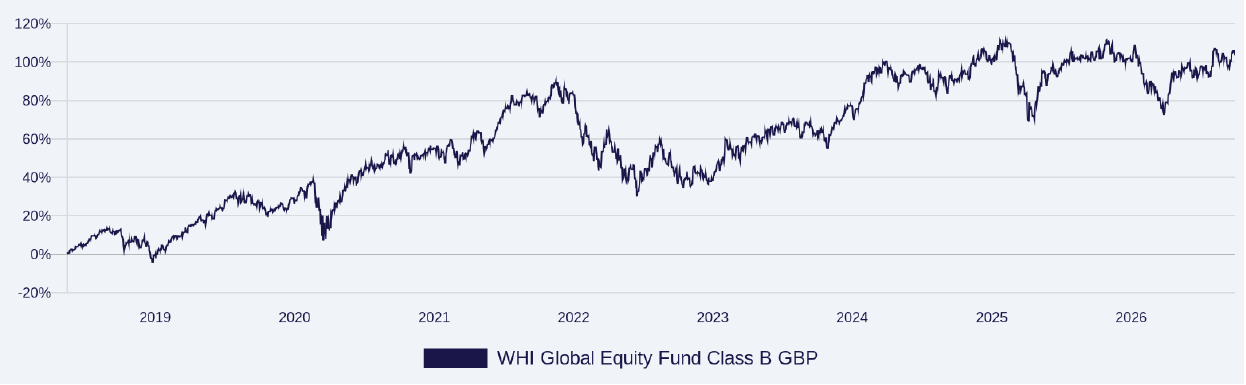
The WH Ireland Global Equity Fund, Class B, returned 0.17% in September 2026. All figures are presented in GBP.
Global financial markets remained resilient during September, although volatility increased as higher energy prices, rising government bond yields and persistent inflation pressures weighed on investor sentiment. Equity markets faced a more challenging backdrop, but resilient corporate earnings and continued enthusiasm for technology and artificial intelligence provided support.
Markets continued to balance resilient corporate fundamentals against a less supportive macroeconomic environment. Looking ahead, elevated energy costs, higher borrowing costs, geopolitical uncertainty and questions around the sustainability and returns of AI related investment remain important risks. We believe these conditions reinforce the importance of focusing on business quality, cash generation and valuation rather than attempting to predict short term macroeconomic movements.
At the fund level, Meta Platforms, Nvidia and ASML were the main contributors to performance. Intuitive Surgical also delivered double digit gains, while Mastercard, Stryker and Adyen were the main detractors. Meta Platforms rose following the announcement of Muse, marking a further step in the development of its personal AI capabilities. Available through WhatsApp and as a standalone application, Muse is designed to help users complete tasks and interact with the digital world.
We believe the longer term opportunity for Meta extends beyond the potential monetisation of standalone AI products. AI can enhance the company’s existing advertising and recommendation platforms by improving user engagement, content discovery and advertising effectiveness. Meta’s significant investment in AI infrastructure and talent therefore has the potential to generate returns across several areas of the business. While increased investment could weigh on margins in the near term, the company’s strong cash generation, scale and established ecosystem provide a strong foundation for these initiatives.
Stryker was among the main detractors during the month, following renewed concerns around supply constraints. The company indicated that manufacturing issues were taking longer than anticipated to resolve, while the expected recovery in joint replacement activity was slower than expected. These developments led to a significant decline in the share price during September.
Despite these near term challenges, we continue to believe the long term investment case remains intact. Stryker benefits from leading positions across medical technology, a differentiated product portfolio and significant opportunities from the continued adoption of robotic assisted surgery. Its Mako platform continues to expand, while underlying demand across its broader portfolio remains attractive. We therefore view the recent weakness as temporary rather than a fundamental deterioration in the company’s competitive position.
Our investment approach remains focused on identifying high quality businesses with strong competitive advantages, attractive returns on capital and the ability to compound free cash flow over the long term. Periods of market volatility can create opportunities to add to businesses where the underlying investment thesis remains intact. We therefore continue to focus on fundamentals, valuation and long term cash generation, while maintaining discipline around position sizing and capital allocation.
Our objective remains unchanged: to compound capital over the long term through a concentrated portfolio of high quality businesses capable of delivering sustainable growth across different market environments.
Monthly data as at: 30/09/2026.