

Macro
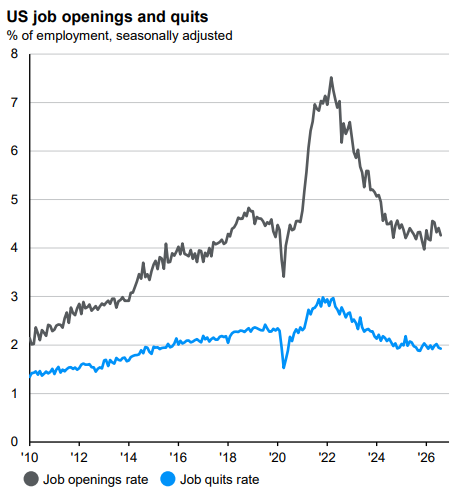
The macro picture remains one of broad strength despite the recent surge in oil prices and diesel prices surpassing $6.50 per gallon, the highest level on record. The global industrial recovery still intact evidenced by the majority of major economies Purchasing Managers’ Indices (PMIs) sitting firmly in expansionary territory, with September 2026 US data pointing to its strongest expansion since July 2021. Meanwhile, economic growth is mirroring the resilience seen in earnings growth. The Atlanta Fed Gross Domestic Product (GDP) tracker now expects US economic growth of 5.1% for Q3 2026, South Korean exports surged 83.5% as demand for memory chips remains elevated. However, Indian GDP growth hitting 7.8% in the latest quarter demonstrates that growth persists beyond technology. Previously, central banks were largely leaning towards reducing interest rates even where inflation was above the targeted 2%. However, economic strength, albeit with renewed inflation concerns, has enabled a more hawkish shift as demonstrated by the Fed, European Central Bank and Bank of Japan’s decision to raise interest rates. The labour market remains relatively soft, in a ‘low hire, low fire’ environment, and we would expect this to be one of the key checks on the Fed hiking interest rates another three to four times, as the market currently expects.
Markets
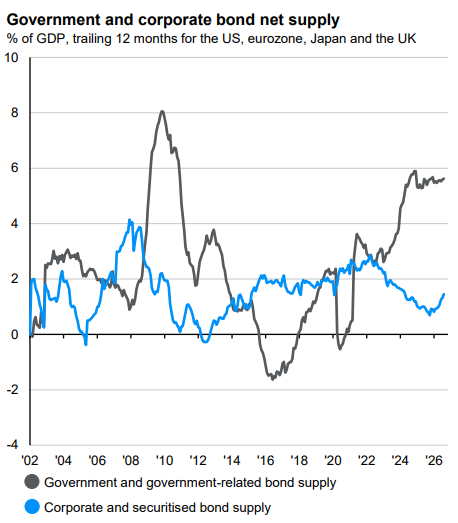
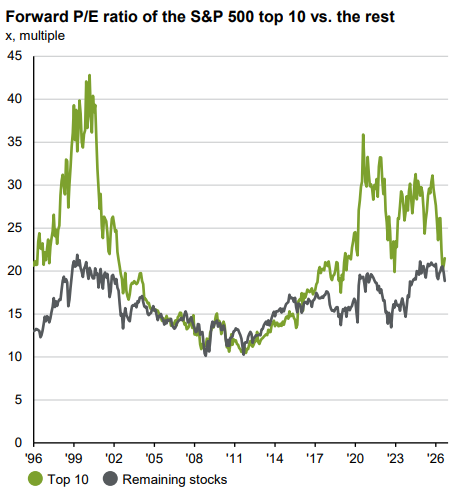
Despite the relatively weak seasonality associated with Q3 2026 and the run-up to US mid-term elections, equity markets have continued to push higher, with volatility remaining relatively sanguine. Standout earnings growth* has remained a key support for equities, with performance lagging company fundamentals and resulting in valuations becoming progressively cheaper as the quarter progressed.. AI chip-maker Nvidia once again saw its market capitalisation surpass $5 trillion, yet it only trades at a small premium to the broader market. This is emblematic of the importance of staying invested and not attempting to time the market by exiting when there are concerning headlines. Just to name a few in this quarter alone, equities have managed to contend with fears over Chinese competition, accelerating Artificial Intelligence (AI) capital expenditure, growing equity issuance amidst record IPO’s, monetary policy tightening and another surge in oil prices above $100 as the conflict in the Middle East escalated and caused bond yields to move higher. This move higher in global bond yields was most visible in the US and Japan 10-year government bond yields surpassing 5% and 3%, respectively. Yields had not reached this level in Japan for three decades. Whilst US Treasury Secretary Scott Bessent’s intervention has been somewhat effective in thwarting the yen weakness, the US debt buyback has not prevented Treasury yields from continuing to climb, with 30-year mortgages now in excess of 7% for the first time in more than two years. Beyond inflation concerns, the bond yield move is also a function of continued US economic strength, ballooning government debt and ‘hyperscaler’ bond issuance to fund the vast amount of AI capital expenditure. However, the Federal Reserve did help allay fears of political influence as it acted against Trump’s wishes to proceed with an interest rate hike in September.
*Earnings growth: Measures how much a company’s profits increase over a specific period.
Positioning and Outlook
As we head into the final quarter of the year, politics will once again crowd the news flow as the Republican Party continues to face pressure from an electorate pushing for change. It seems that Republicans have a very slim chance of maintaining power in both the Senate and House, whilst Brazil also faces an important election which may see President Lula unseated.
We’ve witnessed similar political volatility here in the UK, with seven prime ministers in the last 10 years, and this search for change has seen increased popularity of the far right, which is particularly notable in Germany, as the Alternative for Germany (AfD) gained another historic win this quarter. The political environment does impact markets and Trump’s term has certainly been turbulent. Still, the lack of volatility in markets over his reign is also reflective of the key point that company fundamentals will always be the key driver of returns over the long run and that’s where we remain laser-focused.
Given the strength of these fundamentals we will look to capitalise on any increase in equity market volatility over the coming months associated with the mid-term elections.
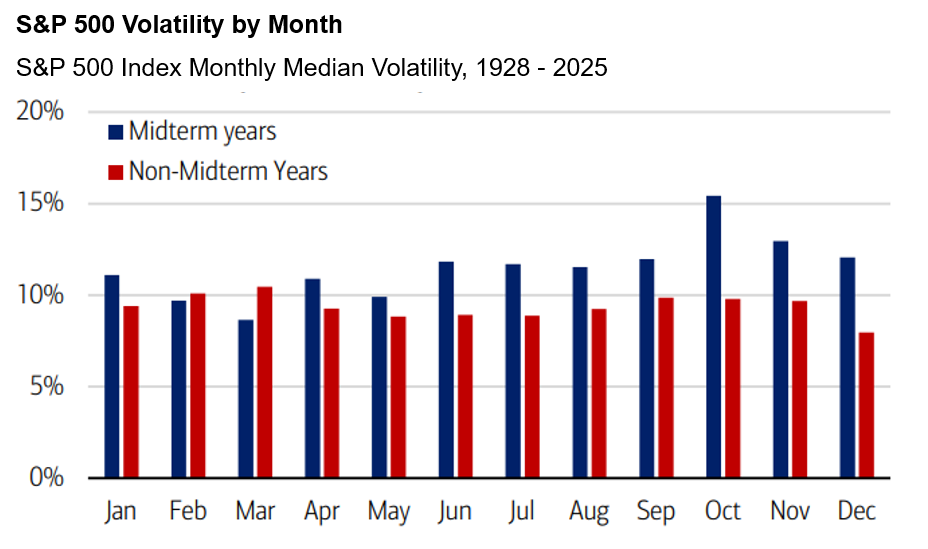
The largely flat performance for the S&P 500 has resulted in the index trading very cheaply at 19x the estimated company’s future earnings. However, these forward earnings are based on optimistic earnings expectations, with analysts expecting 32% earnings growth for full-year 2026. Earnings show no signs of slowing in the near future, but should bond yields continue to rise, the economics for further AI capital expenditure will deteriorate for the ‘hyperscalers’ as they are increasingly forced to turn to the bond market given their depleting free cash flow. Any announcements from these companies that they will not continue to accelerate AI capital expenditures could halt the AI rally, but mid-term elections are likely to be the source of volatility in the more immediate future.
Corporate debt also still remains relatively muted on the whole and corporate balance sheets are still in much better shape than sovereigns.
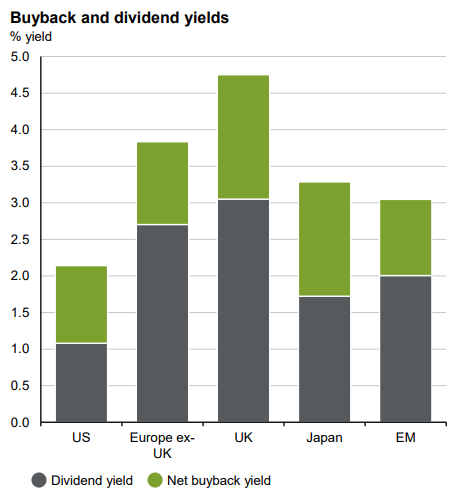
We remain overweight UK equities given their attractive near-term returns from dividends and buybacks, which provide a good balance to the more uncertain and distant returns from US technology. The UK also continues to provide a more favourable technical picture, with equity supply continuing to fall whilst the opposite is true across the pond. More than £70 billion of deals have been announced so far in 2026, over twice the total for 2025. The average premium of these deals has been 43%, with EasyJet commanding an eye-catching 81% after its recent private equity tussle.
Nevertheless, the recent scepticism around AI capital expenditure has presented a good entry point for the larger US technology stocks, with investors now much better compensated for the risks of these more uncertain returns.
Turning to portfolio activity, we exited our position in Evenlode UK Income and Unicorn UK Income due to underperformance and used the proceeds to fund passive FTSE 100 and FTSE 250 exposure to reduce portfolio costs. Meanwhile, we moved more active with our healthcare exposure given the concentrated nature of the index and complexity within healthcare. We used the proceeds from the tracker to invest in Polar Capital Healthcare Opportunities and International Biotechnology Trust, which both have a stellar management team and track record.
Asset allocation was therefore left unchanged in Q3 2026, but as volatility likely picks up in Q4, opportunities could well arise for asset allocation adjustments in the coming months.
Kind Regards,
Robert Matthews, Head of Research and Chartered Wealth Manager
Important Information:
For more industry terms and definitions, visit our glossary here.
All Index data figures are sourced by Morningstar and correct as at 30 September 2026, unless otherwise stated.
The value of investments or any income arising from them may fluctuate and are not guaranteed. Past performance is not necessarily a guide to future performance.